
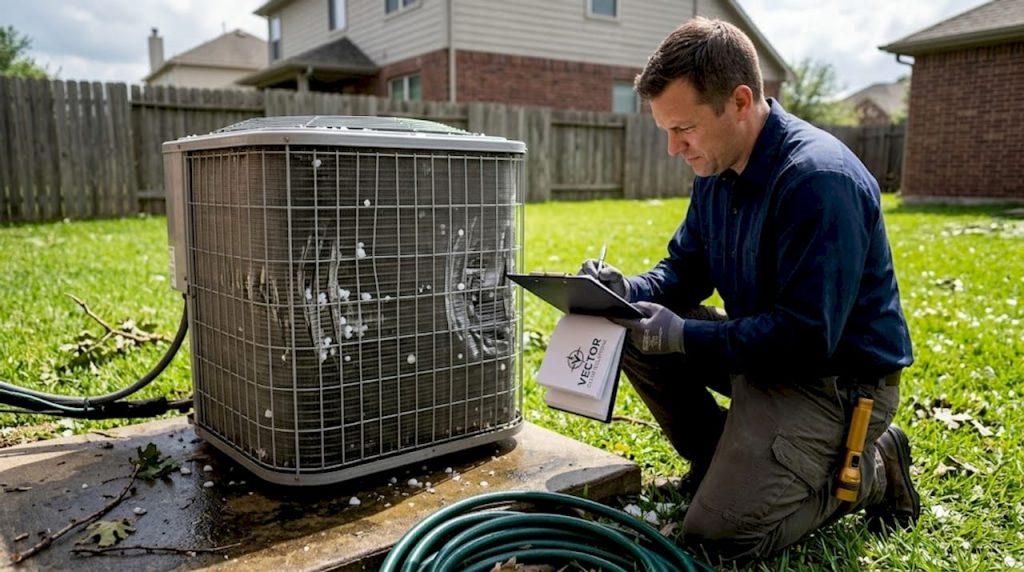
A hailstorm rolls through, leaves your yard littered with dents and debris, and your first instinct might be to assume your outdoor HVAC unit is totaled. That assumption costs property owners money every year. Understanding how hail damages HVAC units is the difference between a fair insurance settlement and leaving thousands of dollars on the table. Most damage is repairable, not replaceable, but only if you catch it early, document it thoroughly, and know what to tell your insurance carrier. This guide walks you through the physical mechanics of damage, what to inspect, how rooftop systems connect to roof problems, and exactly what to do before you file a claim.
Table of Contents
- How hail physically damages HVAC units
- Common types of hail damage and their impact on HVAC functionality
- Why timely inspection and documentation matter for repairs and insurance claims
- Link between rooftop HVAC hail damage and commercial roof problems
- Repair options and setting realistic expectations for hail-damaged HVAC units
- Why prompt, detailed HVAC hail damage documentation often determines your claim outcome
- How Vector Claim Solutions can help you navigate hail damage claims
- Frequently asked questions
Key Takeaways
| Point | Details |
|---|---|
| Hail damages condenser fins | Dented aluminum fins restrict airflow, causing longer runtimes and compressor wear. |
| Hidden damage develops over time | Hairline refrigerant leaks may not show immediately but reduce cooling weeks after a storm. |
| Timely inspections are essential | Licensed technician assessments identify visible and hidden damage for repairs and insurance claims. |
| Rooftop HVAC damage risks roofing issues | Damaged equipment can lead to membrane punctures and drainage problems on commercial roofs. |
| Most HVAC hail damage is repairable | About 77% of commercial hail-damaged HVAC units can be restored without full replacement. |
How hail physically damages HVAC units
Your outdoor HVAC condenser unit sits in the open, unprotected, which makes it one of the most exposed mechanical systems on your property. When hail strikes, it does not hit a single component. It hits everything at once, and each component responds differently.
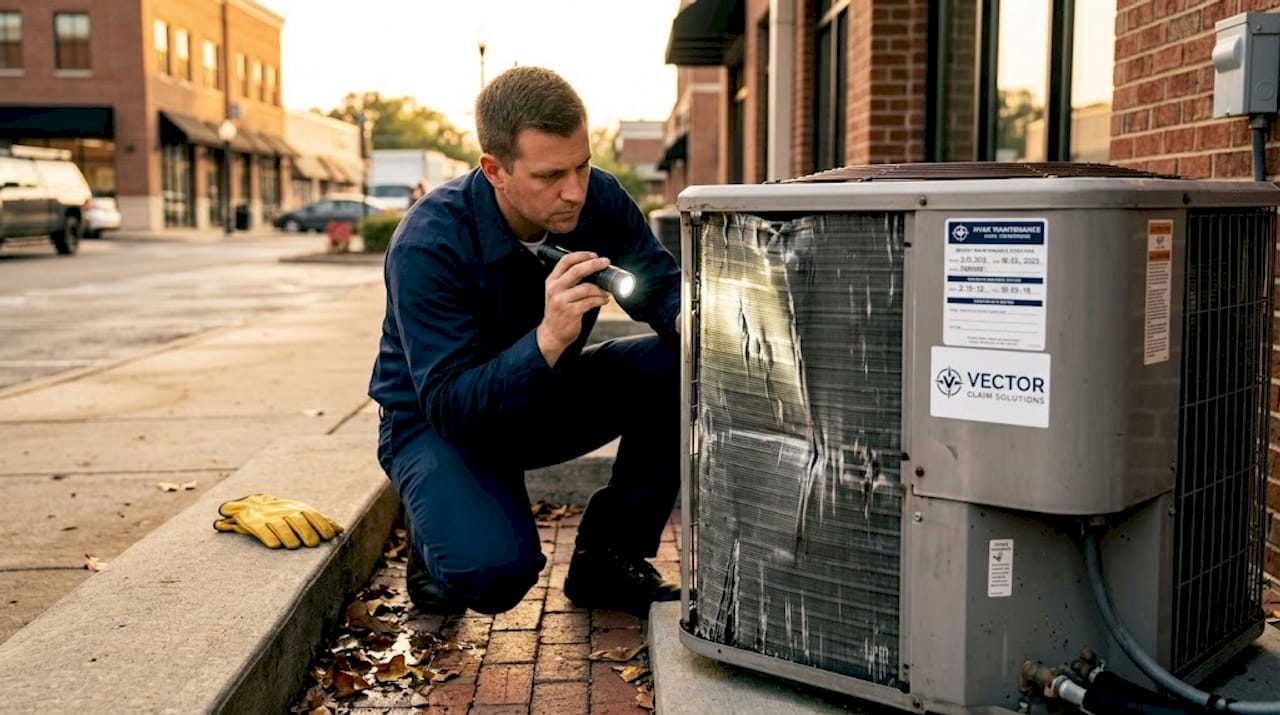
The condenser fins take the worst of it. These are the thin aluminum strips that wrap around the outside of your unit, designed to allow air to pass through and cool the refrigerant inside. Hail deforms aluminum fin condenser coils, which restricts airflow and stresses the compressor. When airflow drops, the system works longer and harder to reach your set temperature, raising your energy bills and wearing out components faster.
Beyond the fins, hail impact on HVAC units can cause damage to:
- Refrigerant lines: Small cracks or damage to brazed joints may not leak immediately but can develop slow leaks over days or weeks, causing gradual loss of cooling capacity
- Fan blades: A dented or bent fan blade creates an imbalance, causing vibration that wears out the motor and bearings over time
- Vent caps and covers: Crushed or displaced covers can block exhaust or intake paths
- Electrical components: Hail can crack housing panels, exposing wiring and controls to moisture
- The cabinet itself: Heavy hail can dent the sheet metal cabinet, which may not seem serious but can expose internal components to further weather damage
Some of this damage is visible the moment you walk outside. Other damage, like a hairline crack in a refrigerant line, requires a pressure test by a licensed technician to detect. Use our hail damage inspection checklist to make sure nothing gets missed before you call your insurance carrier.
Common types of hail damage and their impact on HVAC functionality
Not all HVAC unit hail damage looks the same, and the severity of each type affects your system in different ways. Knowing what you are dealing with helps you have a more informed conversation with both your HVAC technician and your insurance adjuster.
Hailstones as small as a quarter inch can crush condenser aluminum fins, reducing system efficiency by 20 to 40 percent. That range matters. A 20 percent efficiency drop means your system runs longer to cool the same space. A 40 percent drop means your compressor is working in conditions it was never designed to handle, and compressor failure is one of the most expensive repairs in the HVAC world.
Here is a breakdown of the most common damage types and what they mean for your system:
- Fin deformation: Crushed or flattened fins block airflow through the coil. The result is reduced heat transfer, higher energy consumption, and premature compressor wear. A fin comb can straighten mild damage, but severe deformation typically requires coil replacement.
- Refrigerant line damage: Hairline cracks from hail and commercial HVAC damage may not appear immediately. You might notice your home cooling less effectively two or three weeks after the storm with no obvious explanation.
- Fan blade damage: Even a slight bend in a fan blade causes vibration. Over weeks, that vibration damages motor bearings, leading to costly motor replacement if left unaddressed.
- Vent cap damage: Crushed vent caps on gas-burning systems are a safety concern. Blocked exhaust paths can allow carbon monoxide to build up, which is dangerous regardless of whether you have an insurance claim to file.
- Cabinet and housing damage: Dented panels and cracked housing expose internal electronics and coils to water infiltration during future rain events, compounding damage well after the original storm.
Pro Tip: If your energy bills spike noticeably in the weeks after a hailstorm, treat that as a warning sign. Run an inspection checklist for hail damage and schedule a technician visit before the damage deepens.
Why timely inspection and documentation matter for repairs and insurance claims
Speed matters here in two directions: catching damage before it worsens, and documenting it before your insurance carrier’s timeline works against you. Insurance frameworks treat hail as a distinct peril and require licensed HVAC technician assessments to finalize repair scopes. That requirement is not a formality. It directly affects what gets covered and how much.
Follow these steps after any significant hailstorm:
- Photograph your unit immediately. Walk the perimeter of your condenser unit and capture every visible dent, crushed fin section, and damaged panel. Time-stamped photos establish when the damage occurred.
- Schedule a licensed HVAC technician inspection within 48 to 72 hours. The technician should perform a refrigerant pressure test, check fan blade balance, inspect fin coverage, and assess the electrical housing. Verbal assessments are not enough. You need a written report.
- Document the technical findings. Refrigerant pressure readings, fin damage percentage, and any operational anomalies should appear in the written report. This documentation becomes part of your hail damage insurance claim file.
- Keep all repair estimates and reports. Even if you do not file a claim immediately, these records establish the baseline condition of your system post-storm.
- Monitor system performance weekly for 30 to 45 days. Refrigerant leaks and vibration damage often develop delayed symptoms. If your system starts short-cycling, running louder, or struggling to cool, schedule a follow-up inspection and update your documentation.
If your property has multiple units, document all of them. Insurance carriers typically require documentation for each unit separately, and a missed unit on your property damage claim becomes a gap in coverage you cannot easily fill later.
Pro Tip: Ask your HVAC technician to note not just what is visibly damaged but what is functionally affected. Fin deformation that reduces airflow by 30 percent is a stronger claim than “fins are bent,” because it ties visible damage to a measurable performance impact.
Link between rooftop HVAC hail damage and commercial roof problems
For commercial property managers, the conversation about HVAC unit hail damage cannot stop at the equipment itself. Rooftop HVAC systems sit directly on the roof membrane, and hail that damages the unit can trigger roof problems that compound quickly if left unaddressed.
Hail impacts to rooftop HVAC can cause equipment debris that damages roofing membranes and misaligned drainage leading to water pooling and roof deterioration. A displaced equipment cover that slides or scrapes across the membrane during a storm creates puncture or abrasion damage that is easy to overlook during a standard inspection.
Here is why this matters for your claim:
- Debris accumulation: Broken fins, fasteners, and housing fragments from a damaged HVAC unit can lodge in roof drains and scuppers, blocking drainage and causing water to pool
- Standing water: Ponding water accelerates membrane wear, opens seam failures, and can lead to moisture intrusion into the building interior
- Compounding damage: If roof damage is not documented as directly linked to the hail event and HVAC impact, carriers may attempt to treat it as a separate, pre-existing issue
- Flashing and penetration damage: HVAC curbs and duct penetrations can shift slightly after heavy hail, compromising waterproofing at those points
| Rooftop issue | Cause | Potential outcome |
|---|---|---|
| Membrane abrasion | Displaced HVAC cover or debris | Moisture intrusion, interior damage |
| Blocked drainage | Equipment debris in drains | Water ponding, accelerated wear |
| Seam failure | Standing water pressure | Structural moisture damage |
| Flashing separation | Equipment shift at curb | Leak at HVAC penetration |
Inspect both your rooftop HVAC systems and the membrane around them after every significant hail event. Our team regularly works roof damage claims that originated as HVAC hail events, and we can tell you from experience that catching the connection early prevents lengthy claim disputes. Start with spotting hail damage on your roof and work outward from each HVAC curb.
Repair options and setting realistic expectations for hail-damaged HVAC units
Here is a fact that surprises many policyholders: 77% of commercial HVAC systems with confirmed hail damage were restored to pre-loss condition through repairs rather than full replacement. That figure matters because insurance carriers know it too, and a well-documented repair scope can resolve a claim faster and more favorably than pushing for full replacement without justification.
Understanding your repair options keeps you in a stronger position during scope negotiations:
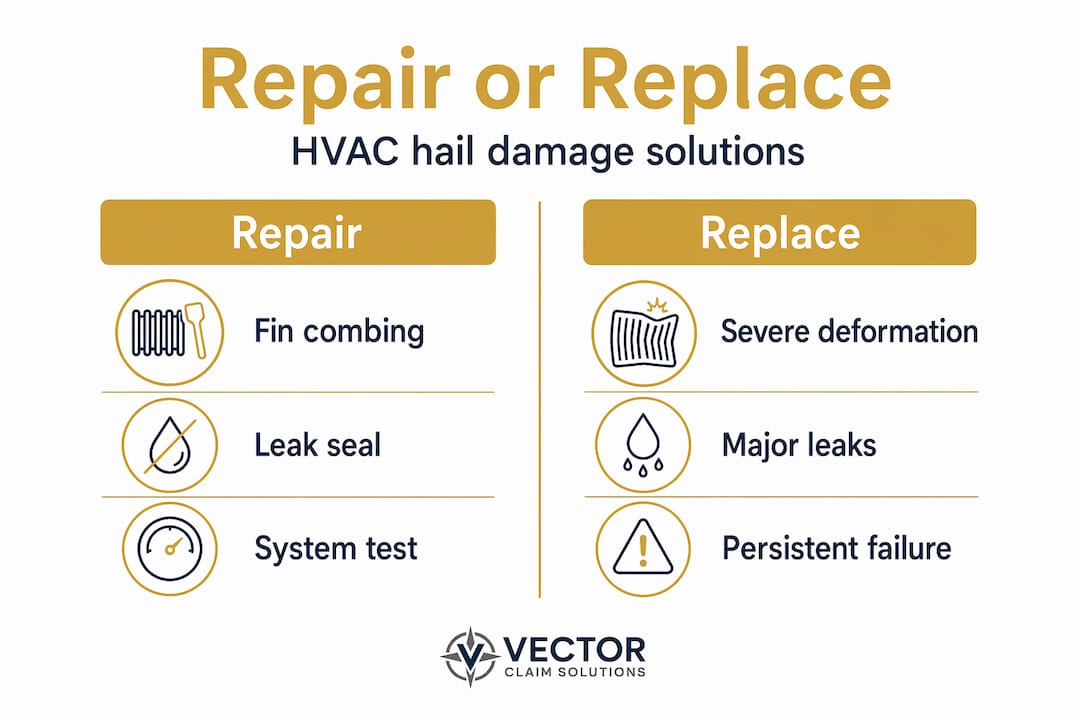
- Fin combing: A fin comb is a simple tool that straightens mildly bent aluminum fins. Labor costs are low, and if damage is caught early, this can restore a meaningful portion of lost airflow without replacing the coil.
- Coil replacement: When fin damage covers more than 30 to 40 percent of the coil surface, replacement is typically more cost-effective than repair. The coil itself is a covered component under most hail damage policies.
- Refrigerant recharge and line repair: Hairline leaks can often be brazed and sealed rather than requiring a full line set replacement. This depends on the location and severity of the crack.
- Fan blade and motor replacement: Replacing a damaged blade is straightforward. If vibration damage has already spread to the motor, replacement cost increases but still usually falls short of full unit replacement.
- Full condensing unit replacement: Reserved for cases where multiple core components are damaged simultaneously or the unit is older and economically impractical to repair.
| Damage type | Likely repair option | Replacement likely? |
|---|---|---|
| Minor fin deformation (<30%) | Fin combing | No |
| Major fin deformation (>40%) | Coil replacement | Partial |
| Hairline refrigerant leak | Braze and recharge | No |
| Dented fan blade | Blade replacement | No |
| Multiple failed components | Component repairs | Possibly |
| Aged unit with widespread damage | Full unit assessment | Yes |
Pro Tip: If your insurance carrier’s adjuster is recommending full replacement when repair is clearly viable, or the opposite, pushing repair when damage is too extensive, consider getting a public adjuster for storm claims involved before you accept any settlement figure.
Why prompt, detailed HVAC hail damage documentation often determines your claim outcome
After years of working through storm damage claims with policyholders, one pattern stands out clearly: the claims that fall short almost never fail because the damage was not there. They fail because the damage was not documented well enough.
Hail damage is frequently undervalued due to overlooked fin deformation and hidden refrigerant leaks. Insurance adjusters working under time pressure often perform visual-only assessments. They count dents. They photograph crushed fins. What they do not always do is run a refrigerant pressure test, measure airflow restriction, or assess whether fan vibration has already started wearing motor bearings. The functional loss goes unrecorded, and the repair scope shrinks to match only what was photographed.
The result is a settlement that covers the visible cosmetic damage but leaves the policyholder paying out of pocket when the system fails six months later because a slow refrigerant leak was never included in the original scope.
This is not a flaw in your policy. It is a documentation gap. Carriers are not required to speculate about damage that was not documented by a qualified professional at the time of the claim. That responsibility falls to you as the policyholder.
The solution is straightforward in principle: get a licensed HVAC technician’s written report that addresses both visible and functional damage before you finalize any repair scope with your carrier. If the initial settlement offer seems low or excludes components your technician flagged, do not accept it immediately. Review what happened if an insurance adjuster misses damage and understand your options to reopen or supplement the claim.
A second opinion from a public adjuster is not an adversarial move. It is due diligence. The documentation you build in the first two weeks after a storm is the strongest evidence you will ever have. Use it.
How Vector Claim Solutions can help you navigate hail damage claims
Dealing with hail damage to your HVAC system is stressful enough without also trying to navigate a complex insurance claim on your own. We work alongside homeowners and commercial property managers to make sure every component of damage, visible and hidden, is documented, scoped, and presented accurately to the insurance carrier.

At Vector Claim Solutions, we specialize in storm and hail damage claims across Nebraska, Iowa, Colorado, Texas, and Florida. We review existing estimates, identify missing damage components, and negotiate with carriers when repair scopes are undervalued. Before you accept a settlement, review the signs you need a public adjuster and download our insurance claim checklist to see exactly what documentation your claim needs. If you want to understand how your carrier calculates what they owe you, our guide on insurance claim payment calculations breaks it down clearly. You do not have to navigate this alone.
Frequently asked questions
Can hail damage to HVAC units be repaired, or does it always require replacement?
Most hail-damaged HVAC units can be repaired rather than replaced, with 77% of commercial units restored to pre-loss condition through targeted repairs. Full replacement is typically only necessary when multiple core components fail simultaneously or the unit is near the end of its service life.
Why might my HVAC system performance drop weeks after a hailstorm even if no damage was visible at first?
Hail can cause small cracks in refrigerant lines that develop slow leaks over days or weeks, gradually reducing cooling performance without obvious external signs. A licensed technician’s refrigerant pressure test is the only reliable way to catch this type of hidden damage early.
What role does professional inspection play in an insurance claim for hail damage?
Insurance frameworks require licensed technician assessments to finalize repair scopes, making a written professional report essential evidence for any hail damage claim. Without it, carriers default to visual-only damage and the settlement often falls short of the full repair cost.
How can hail-damaged rooftop HVAC units affect commercial roofs?
Hail impact to rooftop HVAC equipment can produce debris that punctures or abrades roof membranes and can misalign drainage systems, leading to water pooling and membrane deterioration. Documenting both the HVAC damage and the resulting roof damage as part of the same hail event is critical to getting full coverage.
What should property owners do immediately after a hailstorm to protect their HVAC units?
Take time-stamped photos of all visible damage, schedule a licensed HVAC technician inspection within 48 to 72 hours, and keep all written reports. Prompt photos and licensed inspections help establish the damage timeline and detect hidden issues before they deepen and complicate your claim.